
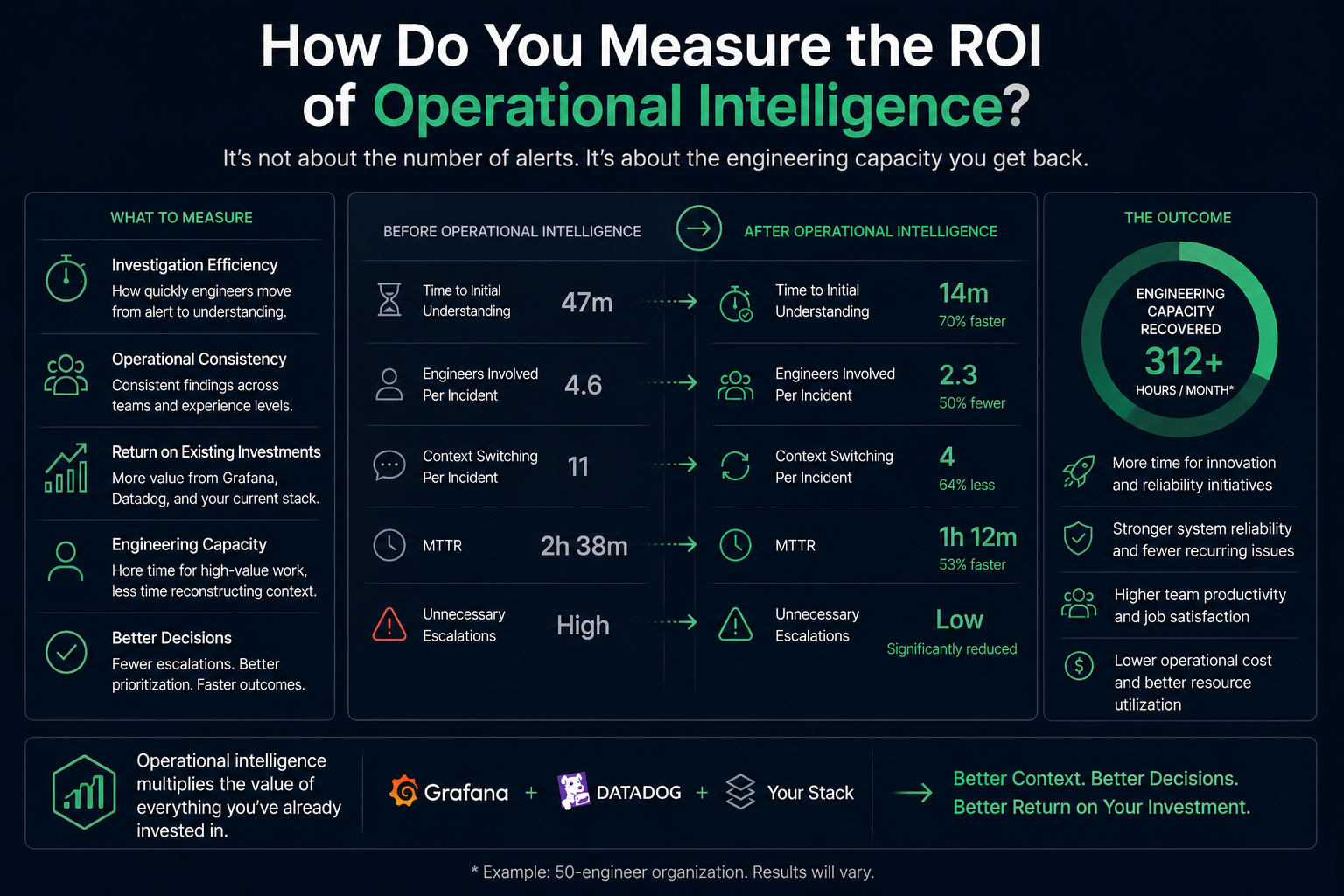
How Do You Measure the ROI of Operational Intelligence?
The success of an operational intelligence platform isn't determined by how much telemetry it analyzes. It's measured by how effectively it helps engineering teams make better decisions, reduce investigation time, and improve operational efficiency.
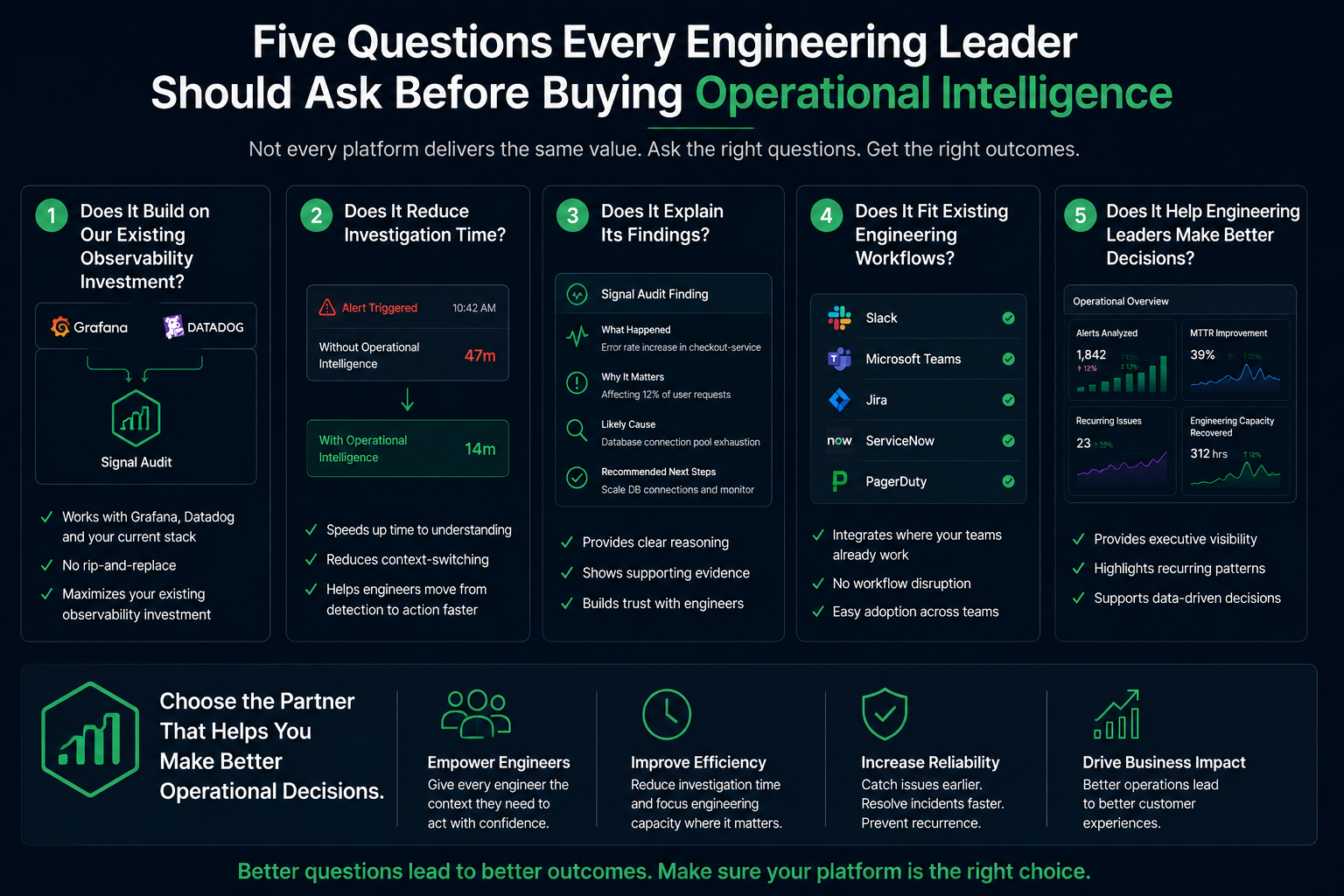
Five Questions Every Engineering Leader Should Ask Before Buying Operational Intelligence
Choosing an operational intelligence platform isn't about finding the one with the most AI features. It's about finding the one that helps engineers make better decisions. Here are five questions every engineering leader should ask before making an investment.
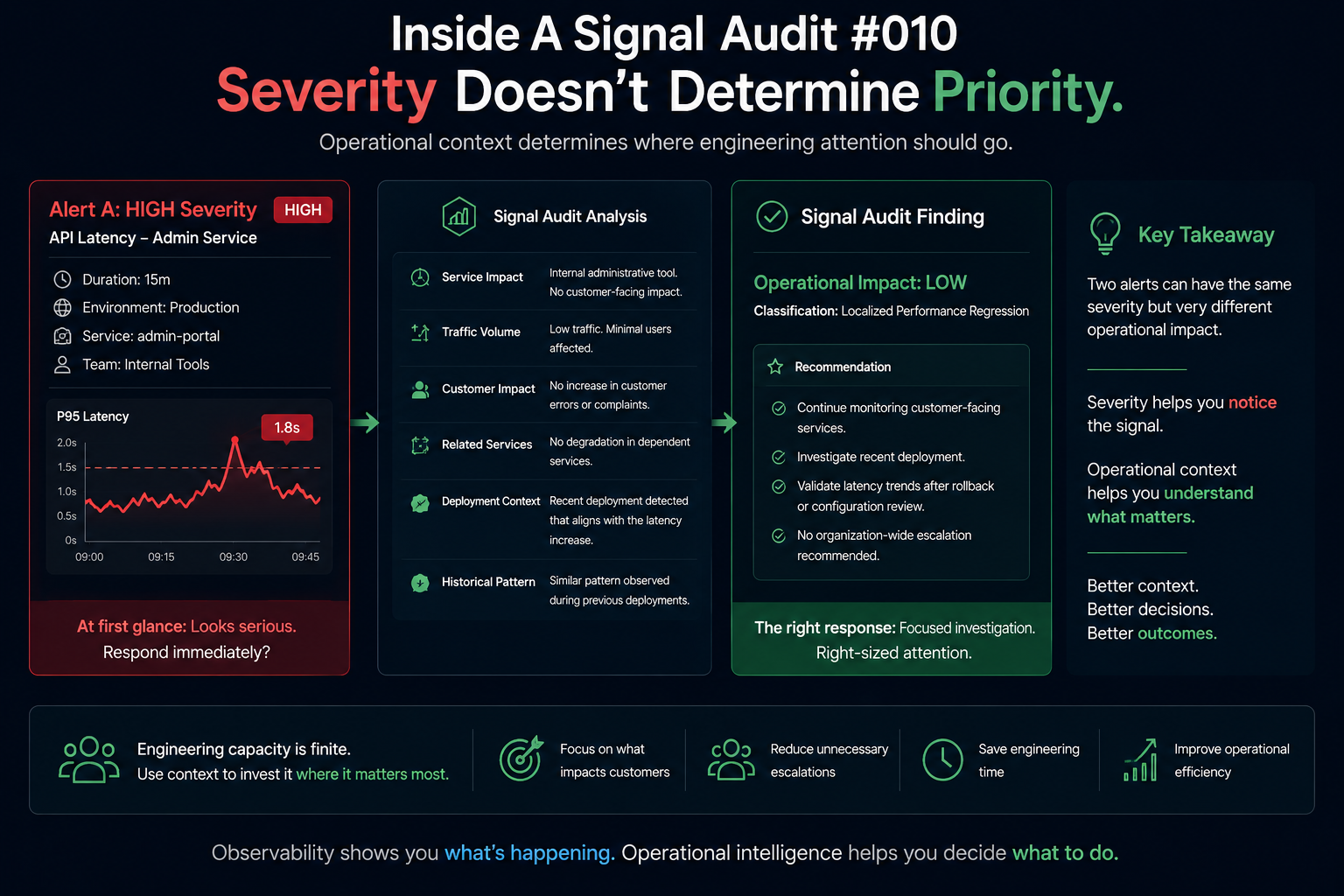
Inside A Signal Audit #010: Severity Doesn't Determine Priority
Alert severity is an important signal, but it isn't the whole story. Operational context determines whether an incident requires immediate action, continued observation, or coordinated investigation. This week's Inside A Signal Audit explores why engineering leaders should prioritize business impact over severity alone.
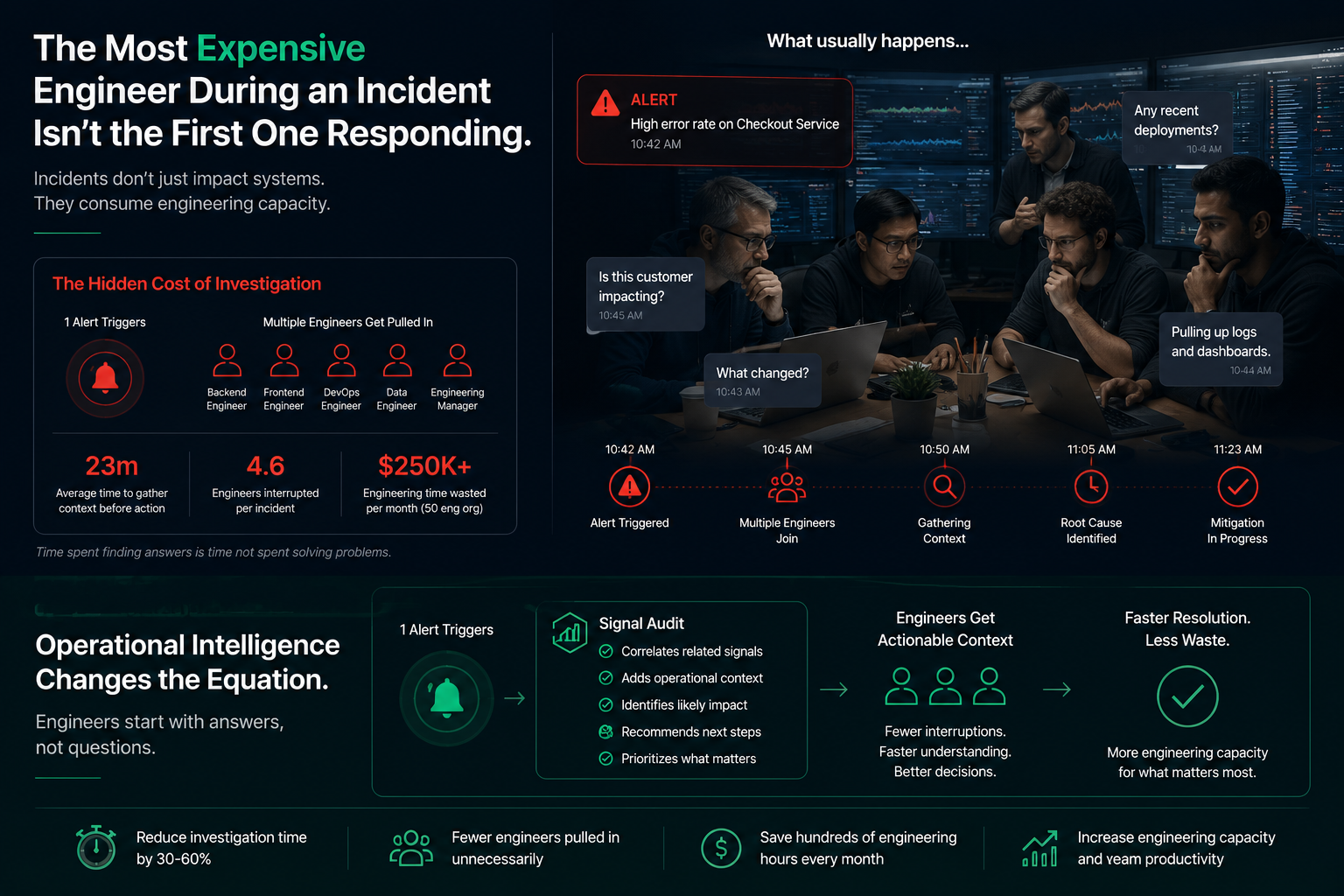
The Most Expensive Engineer During an Incident Isn't the First One Responding
The first engineer responding to an incident isn't necessarily the most expensive part of incident response. As investigations grow, engineering interruptions multiply across teams. Operational intelligence helps reduce the time spent reconstructing context so engineers can focus on solving problems.
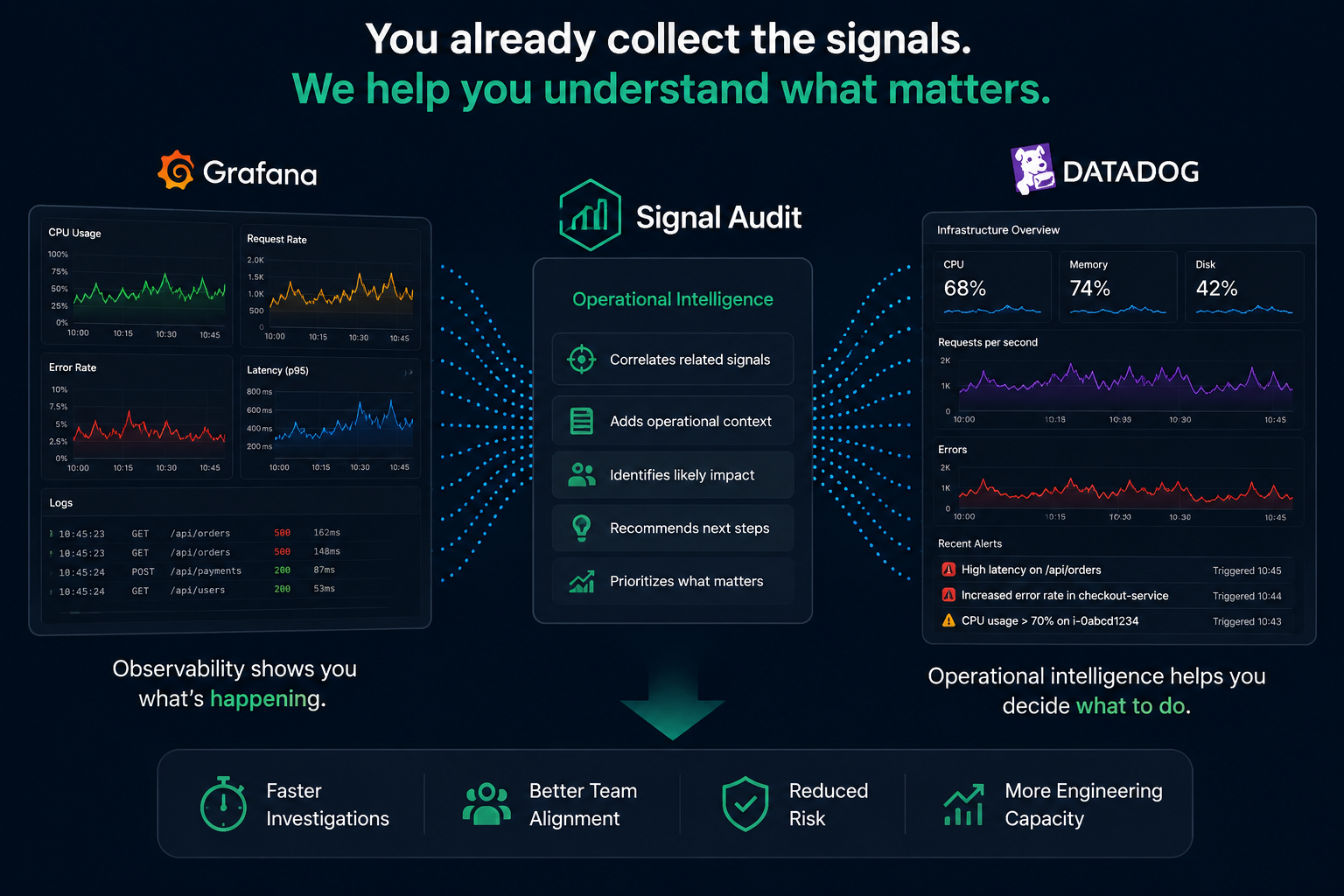
If You Already Have Grafana and Datadog, Why Would You Need Signal Audit?
Grafana and Datadog excel at collecting and visualizing production telemetry. Signal Audit doesn't replace those platforms—it extends them by helping engineering teams prioritize signals, understand operational context, and accelerate incident investigations.
Operational Intelligence Costs Less Than One Percent of Your Engineering Investment
Organizations rarely question investing in engineering talent, cloud infrastructure, or observability platforms. Operational intelligence belongs in that same conversation—not as another expense, but as a way to increase the return on the engineering investment you've already made.
The Most Expensive Part of an Incident Isn't the Alert
An alert is only the beginning of an incident. The real cost comes from the engineers, interrupted work, delayed projects, and time spent reconstructing operational context. Operational intelligence helps teams spend less time investigating and more time resolving.
Inside a Signal Audit #009: The Most Valuable Minutes Are the Ones You Never Spend
Every production incident demands engineering attention. The question is how much of that attention is spent solving the problem versus understanding the problem. This week's Signal Audit demonstrates why reducing investigation time may be one of the highest-return investments an engineering organization can make.
Your Observability Stack Isn't the Expensive Part
Most engineering organizations have already invested in observability platforms, cloud infrastructure, and experienced engineers. The challenge isn't collecting more telemetry—it's helping teams extract better operational decisions from the data they already have.
Your Engineering Team Already Costs Millions. Are You Protecting That Investment?
Engineering organizations routinely invest millions of dollars each year in people, cloud infrastructure, and observability platforms. Yet many still rely on engineers to manually reconstruct incidents from raw alerts. Operational intelligence isn't another expense—it's a way to increase the return on the engineering investment you've already made.
Your Alerts Aren't the Outcome. They're the Beginning.
An alert is often treated as the finish line: investigate it, resolve it, close it. In reality, an alert is the starting point for understanding how your systems behave and how your organization can improve.
What Happens After a Grafana Alert?
Inside A Signal Audit #008: When an Alert Became an Investigation
Every alert tells you something happened. The real value comes from understanding why it happened, how it relates to previous events, and what it means for your system going forward.
Why We Built the Grafana Integration for Signal Audit
Alerts are designed to tell you something happened. They rarely explain why it matters, what patterns led to it, or what should happen next. That's the gap we set out to close.
Your Monitoring Stack Already Knows More Than You Think
Every production environment is constantly communicating through alerts, metrics, and events. The challenge isn't collecting more telemetry—it's recognizing the operational intelligence already hiding inside the signals your systems produce.
Your Competitors Aren't Collecting More Data. They're Making Better Decisions.
Every engineering organization has access to telemetry. The organizations that move faster aren't necessarily collecting more data—they're extracting better decisions from the information they already have.
The Most Expensive Problems Rarely Trigger Critical Alerts
Critical alerts demand immediate attention. But the operational issues that consume the most engineering time often begin as small, recurring patterns that never trigger an emergency.
Inside A Signal Audit #007: The Incident Everyone Solved—But Nobody Prevented
Some incidents don't persist because they're difficult to resolve. They persist because organizations become exceptionally good at responding to them instead of preventing them.
Healthy Metrics Don't Always Mean a Healthy Business
A dashboard can look healthy while operational risk quietly grows beneath the surface. Understanding patterns—not just metrics—helps engineering teams identify problems before they become incidents.
The Cost of Waiting Until an Incident
Most operational problems don't begin with a major incident. They begin with small patterns that teams gradually learn to live with. By the time an outage occurs, the system has often been telling its story for weeks—or even months.
Seeing similar patterns in your environment?
Talk directly with the creator of Signal Audit.
Schedule a Signal Review to discuss the operational patterns, observability gaps, and production risks hiding inside your telemetry before they become customer-facing incidents.
Schedule a Signal Review